Digital Marketing

HOW TO FIND A GOOD WEB DESIGNER

Have you ever gone to a business website and enjoyed the experience? The animation, design, colors, and ergonomics seduced you. You remember the brand, and you even signed up for the newsletter.

The appearance of a website influences the visitor. He may stay longer to check out the offers and navigate from one page to another. He will keep a positive idea of ​​the brand, and he can also talk about his experience to those around him. Creating a website requires both technical skills and a creative sense and also skills in human interaction.

So how do you go about finding a good web designer? What criteria should you rely on when searching? Here is some food for thought.

The qualities of a good web designer

So one of the things you know is to identify a decent web designer’s qualities. To do this, here are some tips that can guide you.

Have excellent computer skills

Computer skills are essential to understand the language of the web, such as HTML, for example. Knowledge is as much technical about software as it is about the interaction between the web and software.

Have consistency in your work

Throughout the process, the web designer will integrate a logical and continuous working method. His consistency will allow him fluidity in his tasks and find and fix an element that is not working correctly, for example.

Have a good stress tolerance

Projects go fast, deadlines are short, and requests for modifications or changes are numerous. Not to mention that the designer can work on several projects at the same time. Having a good stress tolerance helps to stay on course for different projects and ensure a quality project.

Important for a web designer: have a very strong sense of aesthetics

Finding a beautiful element is subjective. However, in the web world, it is necessary to have a strong sense of aesthetics to create designs that will make the business stand out from all the possible internet offerings. You have to have an eye to recognize what will or will not like the target and the company.

Take continuous web design training

What is his training? Does he take training to be on the lookout for the latest trends? As in fashion, trends in web design are constantly changing every year. The web designer must follow training regularly to update. It can be as simple as watching training capsules on the Internet, for example.

Know-how, know-how, and business acumen

A good freelancer will know how to master both the creative side and the rational side. He will know how to take the criticisms and comments made by the client. He will also be able to provide comments and professionally guide the client. Also, an educational aspect can be very useful in explaining concepts to the client. It is the know-how and the interpersonal skills.

Business acumen is also important for knowing where to put energy and for managing the project. He keeps the project moving in the right direction. Business acumen helps maintain a good business relationship with clients.

In short, no one is perfect. However, you might spot the qualities and skills in candidates you feel are most important to you. That way, you could choose the candidate that suits you best.

Find good web designers

While taking into account the characteristics of the right candidate, you can search the Internet to find web designers. You could analyze the different profiles and the different services offered. Through research, examples can inspire you for the design of your site. You could also see the different types of site operations and mention them to the web designer.

Check the portfolio of web designers

Once you’ve done your research and found potential collaborators, dig deeper by looking at their portfolios. Take a look at the projects and see if the sites have been very successful by reading comments left by customers. Test the sites for yourself for efficiency, ergonomics, and style. The verification part may take time, but it will be beneficial in making choices.

You might also know what type of project the designer has completed in the past, the type of business, if their artistic creation is right for you, etc.

Contact potential web designers

You are not able to know if you want to work with an agency or a freelancer? Please take a few minutes to call them and tell them about your project. In this way, the first contact will have been made, and subsequently, you can meet them to make a choice.

Get to know the designer

As you are trying to find out if a professional relationship is possible between the two of you. You can ask him questions to get to know him better. It is recommended that you meet with the person to establish a long-term relationship with them. Here are some ideas:

  • Ask him about the latest trends;
  • How does he work? What is the process?;
  • How does he see the deadlines ?;
  • Does he do small or big projects ?;
  • What is the price?;
  • Talk about these projects;
  • When he is available to start;
  • How long has he been doing this ?;
  • What are his training and his background ?;
  • Ask more technical questions to find out if it has an educational side.

Define your web design project

Define your goals to present them to the web designer. Having a clear idea of ​​what you want will help you make better choices and save time.

  • What do you want to promote?
  • Do you want a transactional site?
  • What is your budget?
  • Do you want to work with a freelance or an agency?

Of course, to find the right person, there is necessarily some upstream work to establish your purpose. It is also possible that the parameters are determined with the designer to adapt to his skills.

Ask your entourage

You can ask those around you if anyone has any recommendations for a web designer. You may have an acquaintance that can give you a helping hand.

Finally, if you do a lot of work upfront, it will be profitable throughout the process, and the results will be more likely to be there. Also, note that a freelancer can be inclined to do smaller projects. However, it can also hire specialists to carry out large-scale projects.

Do you want to launch your online business presence? Are you looking for Web Development in Pakistan to upgrade your web design? Count on us to get competing Web Design and Development services.
Digital Marketing

Responsive site: 6 advantages of responsive design

What is an adaptive site? Definition.

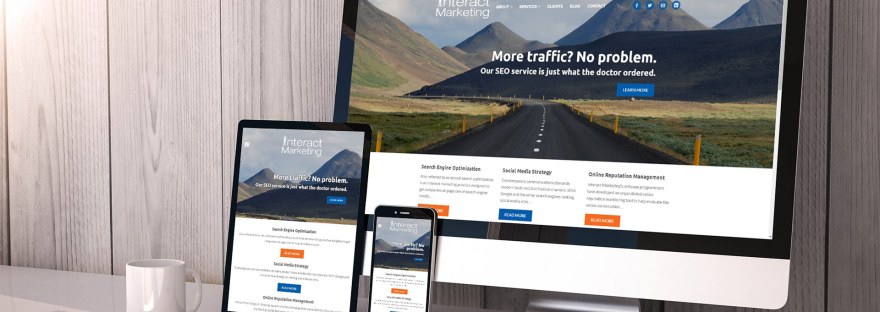
An adaptive or “responsive” website adapts to all screen sizes and all resolutions. Regardless of the device used, the website will display as well and provide access to the same information by adjusting its formatting. It helps provide an ergonomic user experience on all devices. You can contact our team for your Web developement in Pakistan.

Why create an adaptive site?

Beyond being useful, the responsive website is now a necessity for businesses. In particular, it allows your site to be optimized for mobile and thus opens the way for you to acquire new customers. Google has announced that mobile adaptability has an impact on website SEO. Consequently, a responsive website will have a better chance of being well placed by the Google Index and of gaining more visibility regardless of the device used by the Internet user.

Your site embodies your business on the web; it must proudly represent your identity and your values. An adaptive website allows you to convey a sense of performance and confidence to your audience. If your user has to magnify their mobile screen to find important information or successfully navigate your site, they will have an unpleasant experience. In a competitive environment, companies can no longer afford not to have a responsive website.

Responsive site: mobile-first vs responsive design

There are two principal ways of creating a responsive (or responsive) website. The first mobile (or mobile-first) and responsive design (responsive design). Concretely, it is the same process in two opposite directions. They make it possible not to have to create a dedicated mobile site which is a second site devoted only to mobiles. The separate mobile site is very costly in time, money, and SEO efforts.

  • “Mobile first” consists of creating an adaptive website starting from the mobile interface, then adapting it to tablets and computers. It should be favoured if your audience mainly uses the mobile to visit your site. It is a technique designed for mobile use.
  • Responsive design allows you to create an adaptive website starting from the computer interface. If more than 60% of companies have increased their revenues thanks to responsive design, it is no coincidence. This is the most common technique for creating a site compatible with all devices. Responsive design allows you to create a website that will adjust to all screen sizes and all resolutions. Google considers that an adaptive webpage created in responsive design allows efficient mobile use. It, therefore, will enable you to meet the search engine’s SEO criteria.

What are the benefits of a responsive site?

1. An Adaptive Architecture

Creating a responsive website allows you to adopt a structure (or architecture) compatible with different devices that emphasize the essential pages of your website. How you structure information is crucial for your visitor. Your site must make critical information accessible to your customer. With an adaptive website, the user can access the critical elements of your site, whether on mobile, tablet or computer.

2. Ergonomic Navigation

Thanks to its adaptive architecture, a responsive website provides an optimal user experience on all devices. Your menus, your texts or the placement of your buttons are adjusted to the different screen sizes. No need to do individual work on each format to get your website responsive. Thanks to the responsive design, you can benefit from optimized navigation for all types of screens.

3. Multi-Screen Content

Have you worked hard for successful content creation and want to avoid repeating the task to make your site mobile-friendly? With responsive design, your textual content adapts to the user by adjusting its formatting according to the device. Font size, the width of text columns, size, and call-to-action writing follow suit and change based on the screen.

4. Visuals That Adapt

The visual power of images on a website is no longer to be proven, whether on a tablet, computer or mobile, they are essential. A responsive website allows automatic adjustment of the size of your images. As you can see above, the photos on the Combustible site change layout depending on the screen size. On computer and tablet, we have 2 shots per column, but only one for the mobile version. The visuals adapt to provide an ergonomic experience.

5. Better Seo

Among the practices for optimizing SEO, owning an adaptive website occupies a key role. The responsive website, unlike the separate mobile site, allows you to bring together your natural referencing or SEO (Search Engine Optimization) efforts on your site. Creating a responsive website will enable you to acquire traffic from all types of devices. An excellent adaptive place reduces the bounce rate (premature end of the visit) on mobiles and tablets by offering a better user experience this improves the opportunities to appear at the top of the search results.

6. A Variety Of Tools Available

To create a responsive website, you are spoiled for choice. Here are software and tools that allow you to design a responsive website for your business:

  • Online creation tools are plentiful and will enable you to create a responsive website easily. They are easy to use but do not allow a great personalization of your website.
  • CMS (Content Management System) like WordPress is the most used software. Thanks to them, you can create a responsive and highly personalized site. Your site will meet your needs perfectly but will require a minimum of expertise to be managed.
WHAT IS A FULL-STACK WEB DEVELOPER
Digital Marketing

What are the stages of developing a website?

Often overlooked when designing a website, development is the crucial step that will give birth to the project on the web. From static to dynamic, your idea or web design will finally come to life.

If you want to develop a good website visit on web design & development.

Front-end development

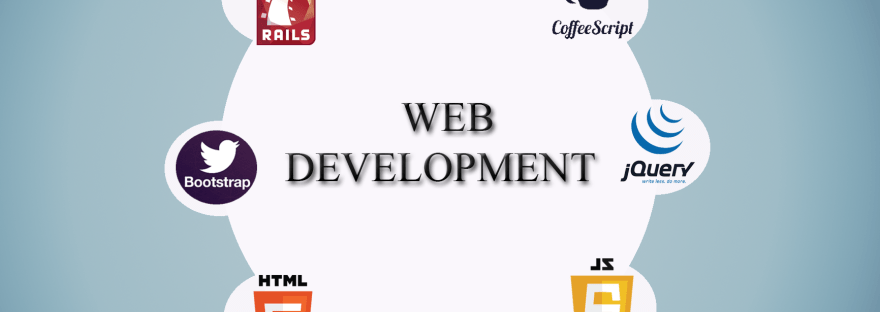
The first step in shaping a website consists in integrating the design, designed by the web designer, using programming software that allows you to write all the code necessary to display the graphic elements and this, on all web browsers. The languages ​​used during this phase are: HTML to shape the structure of the website, CSS to add colors and styles to elements and JavaScript to design the various animations and other desired effects. The  front-end development  is what allows a site to be visible from a mobile device, a tablet or a computer and that, regardless of the resolution of the screen.

Back-end development

The back-end development is to make every effort to take advantage of the site’s features and business rules programmed on the website or web application. The complexity of the functionalities will depend on the type of project: it can be relatively simple tasks such as integrating a payment platform for an already existing site, or something more complex that requires a database such as the automation of process, the development of a CRM, a custom API or even an import script.

This crucial step is the least visible element of the website and perhaps even the least known because it rarely has elements. visuals. On the other hand, it is the element that will have the most impact on the return on investment of the company.

The production start

Once the unit and functional testing phase has been completed on the staging environment, the site or application must be put online on a web server . The full stack developer must therefore be able to set up a server, physical or virtual, to be able to deliver the code to it and make it available on the web by associating a domain name with the server via the DNS.

And then?

And there you have it, your site would now be online and functional, but the work doesn’t stop there! For your potential customers to discover your business on the web, SEO work might be more than necessary.

And just like a house, the newly constructed website will soon need to be maintained and updated in order to avoid unpleasant surprises. Obviously, many companies like to see their website evolve over the years in order to stay up to date with trends and / or add features that could allow them to save a lot of time and money in the short and medium term. Ready to get started?