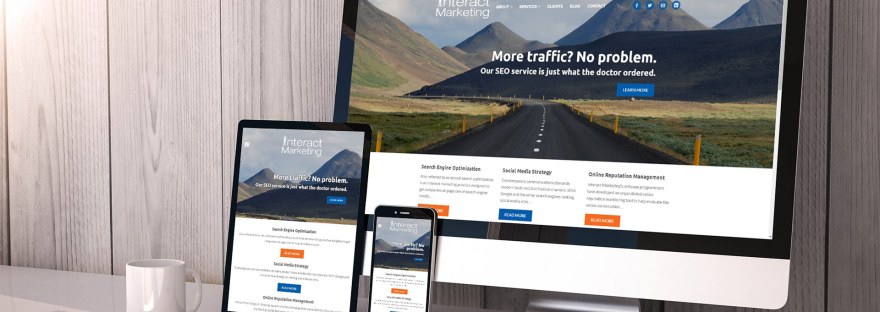
What is an adaptive site? Definition.
An adaptive or “responsive” website adapts to all screen sizes and all resolutions. Regardless of the device used, the website will display as well and provide access to the same information by adjusting its formatting. It helps provide an ergonomic user experience on all devices. You can contact our team for your Web developement in Pakistan.
Why create an adaptive site?
Beyond being useful, the responsive website is now a necessity for businesses. In particular, it allows your site to be optimized for mobile and thus opens the way for you to acquire new customers. Google has announced that mobile adaptability has an impact on website SEO. Consequently, a responsive website will have a better chance of being well placed by the Google Index and of gaining more visibility regardless of the device used by the Internet user.
Your site embodies your business on the web; it must proudly represent your identity and your values. An adaptive website allows you to convey a sense of performance and confidence to your audience. If your user has to magnify their mobile screen to find important information or successfully navigate your site, they will have an unpleasant experience. In a competitive environment, companies can no longer afford not to have a responsive website.
Responsive site: mobile-first vs responsive design
There are two principal ways of creating a responsive (or responsive) website. The first mobile (or mobile-first) and responsive design (responsive design). Concretely, it is the same process in two opposite directions. They make it possible not to have to create a dedicated mobile site which is a second site devoted only to mobiles. The separate mobile site is very costly in time, money, and SEO efforts.
- “Mobile first” consists of creating an adaptive website starting from the mobile interface, then adapting it to tablets and computers. It should be favoured if your audience mainly uses the mobile to visit your site. It is a technique designed for mobile use.
- Responsive design allows you to create an adaptive website starting from the computer interface. If more than 60% of companies have increased their revenues thanks to responsive design, it is no coincidence. This is the most common technique for creating a site compatible with all devices. Responsive design allows you to create a website that will adjust to all screen sizes and all resolutions. Google considers that an adaptive webpage created in responsive design allows efficient mobile use. It, therefore, will enable you to meet the search engine’s SEO criteria.
What are the benefits of a responsive site?
1. An Adaptive Architecture
Creating a responsive website allows you to adopt a structure (or architecture) compatible with different devices that emphasize the essential pages of your website. How you structure information is crucial for your visitor. Your site must make critical information accessible to your customer. With an adaptive website, the user can access the critical elements of your site, whether on mobile, tablet or computer.
2. Ergonomic Navigation
Thanks to its adaptive architecture, a responsive website provides an optimal user experience on all devices. Your menus, your texts or the placement of your buttons are adjusted to the different screen sizes. No need to do individual work on each format to get your website responsive. Thanks to the responsive design, you can benefit from optimized navigation for all types of screens.
3. Multi-Screen Content
Have you worked hard for successful content creation and want to avoid repeating the task to make your site mobile-friendly? With responsive design, your textual content adapts to the user by adjusting its formatting according to the device. Font size, the width of text columns, size, and call-to-action writing follow suit and change based on the screen.
4. Visuals That Adapt
The visual power of images on a website is no longer to be proven, whether on a tablet, computer or mobile, they are essential. A responsive website allows automatic adjustment of the size of your images. As you can see above, the photos on the Combustible site change layout depending on the screen size. On computer and tablet, we have 2 shots per column, but only one for the mobile version. The visuals adapt to provide an ergonomic experience.
5. Better Seo
Among the practices for optimizing SEO, owning an adaptive website occupies a key role. The responsive website, unlike the separate mobile site, allows you to bring together your natural referencing or SEO (Search Engine Optimization) efforts on your site. Creating a responsive website will enable you to acquire traffic from all types of devices. An excellent adaptive place reduces the bounce rate (premature end of the visit) on mobiles and tablets by offering a better user experience this improves the opportunities to appear at the top of the search results.
6. A Variety Of Tools Available
To create a responsive website, you are spoiled for choice. Here are software and tools that allow you to design a responsive website for your business:
- Online creation tools are plentiful and will enable you to create a responsive website easily. They are easy to use but do not allow a great personalization of your website.
- CMS (Content Management System) like WordPress is the most used software. Thanks to them, you can create a responsive and highly personalized site. Your site will meet your needs perfectly but will require a minimum of expertise to be managed.

 Blog Vision